
Recent events concerning young children’s safety and wellbeing in Australian early childhood education and care (ECEC) services have raised important questions about how we engage children and hear their voices.
Actively involving children and young people in policy and practice can support them to gain essential skills and improve the quality, relevance and safety of services (Stafford et al., 2021; Constable et al., 2025). In any case, it’s a child’s right. As a signatory to the United Nations Convention on the Rights of the Child (UNCRC), Australia has agreed to uphold children’s rights to freely express their views and be heard on all matters that affect them.
A supportive policy environment
Australia has a strong foundation for respecting children’s rights through key policy frameworks. For example, the Early Years Strategy 2024–2034sets the direction and course for the Australian Government’s efforts to nurture young children for a bright future. One of the Strategy’s four priority focus areas is to embed the voices of children and their families in policies and decisions that affect them. It also commits to creating opportunities to observe, listen and talk with children and families, and to take action to elevate their voices. This approach upholds the UNCRC by translating its principles into policy action.
A how-to guide for involving children
In July this year, the Murdoch Children’s Research Institute launched the Voice of the Child toolkit at an event featuring Australian and international experts on child voice and co-design with children. Panellists, including Dr Michael Preston of Sesame Workshop, shared examples and practical guidance on how to safely, ethically and meaningfully embed child voice in program evaluations, research, digital technology design and policy development. The Voice of the Child toolkit describes in detail the principles, processes and methods for including children in matters that affect them in policy, research and practice.
An illustration of practice
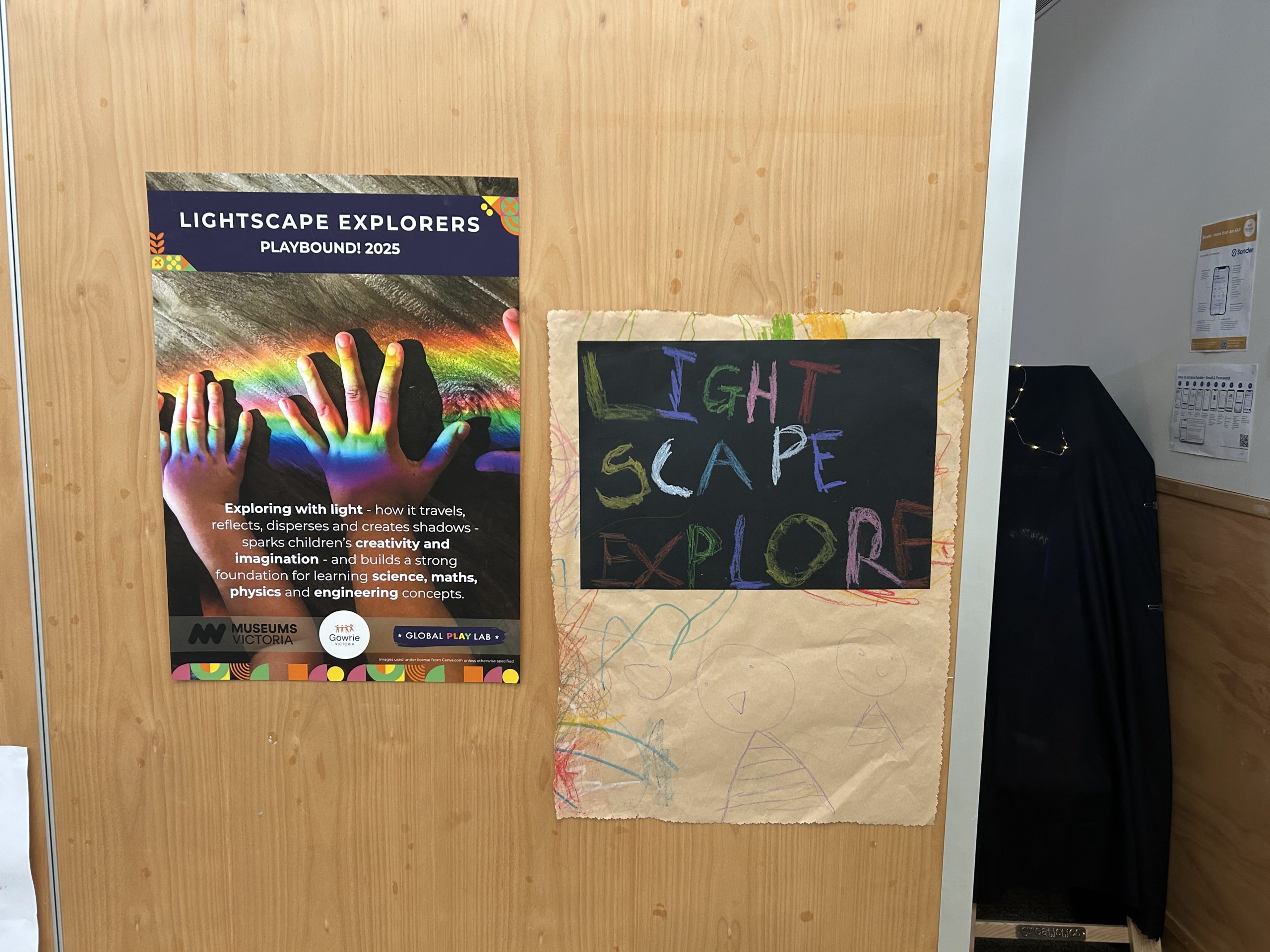
Gowrie Victoria* is leading the way in bringing the Early Years Strategy to life, as showcased during their event for Playbound 2025 called ‘Lightscape Explorers’, held at Gowrie @ the Harbour. Playbound is Museums Victoria’s annual festival of play, where sites across Melbourne opened their doors from 5 to 20 July, offering engaging play and learning experiences for children aged birth to 12.
For Playbound 2025, Gowrie Victoria decided to take a new approach.
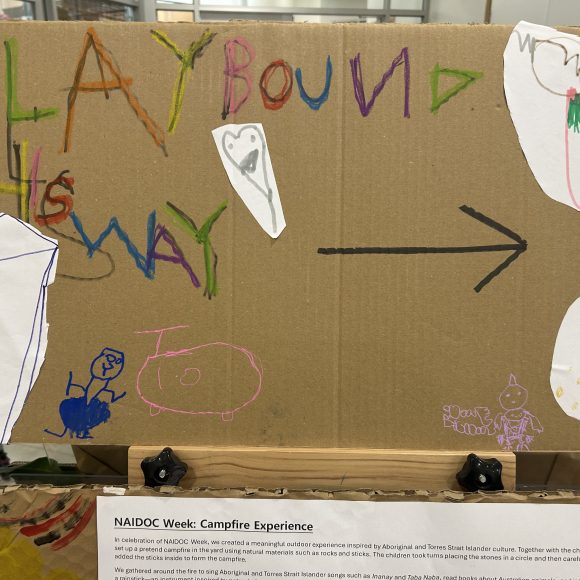
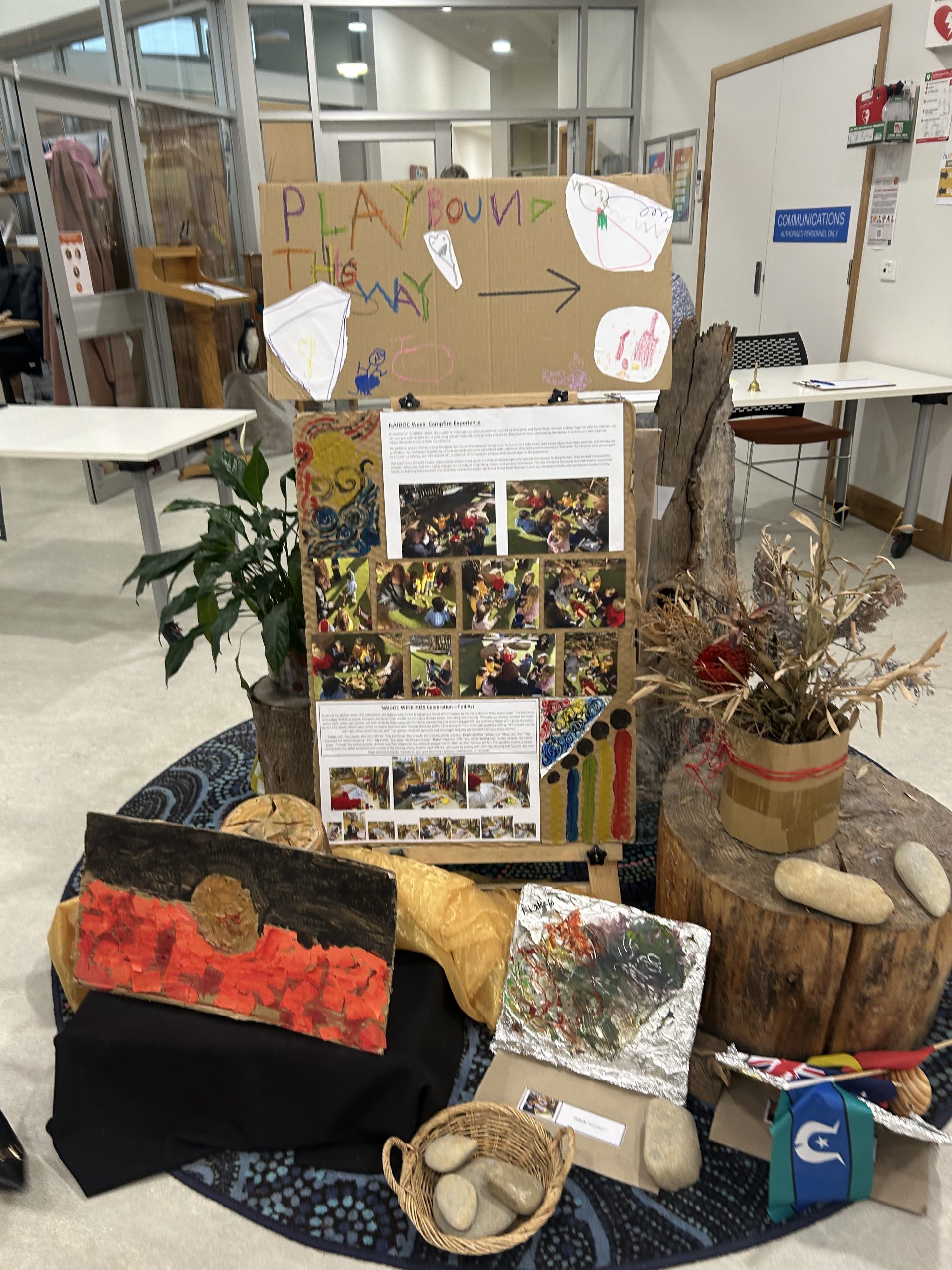
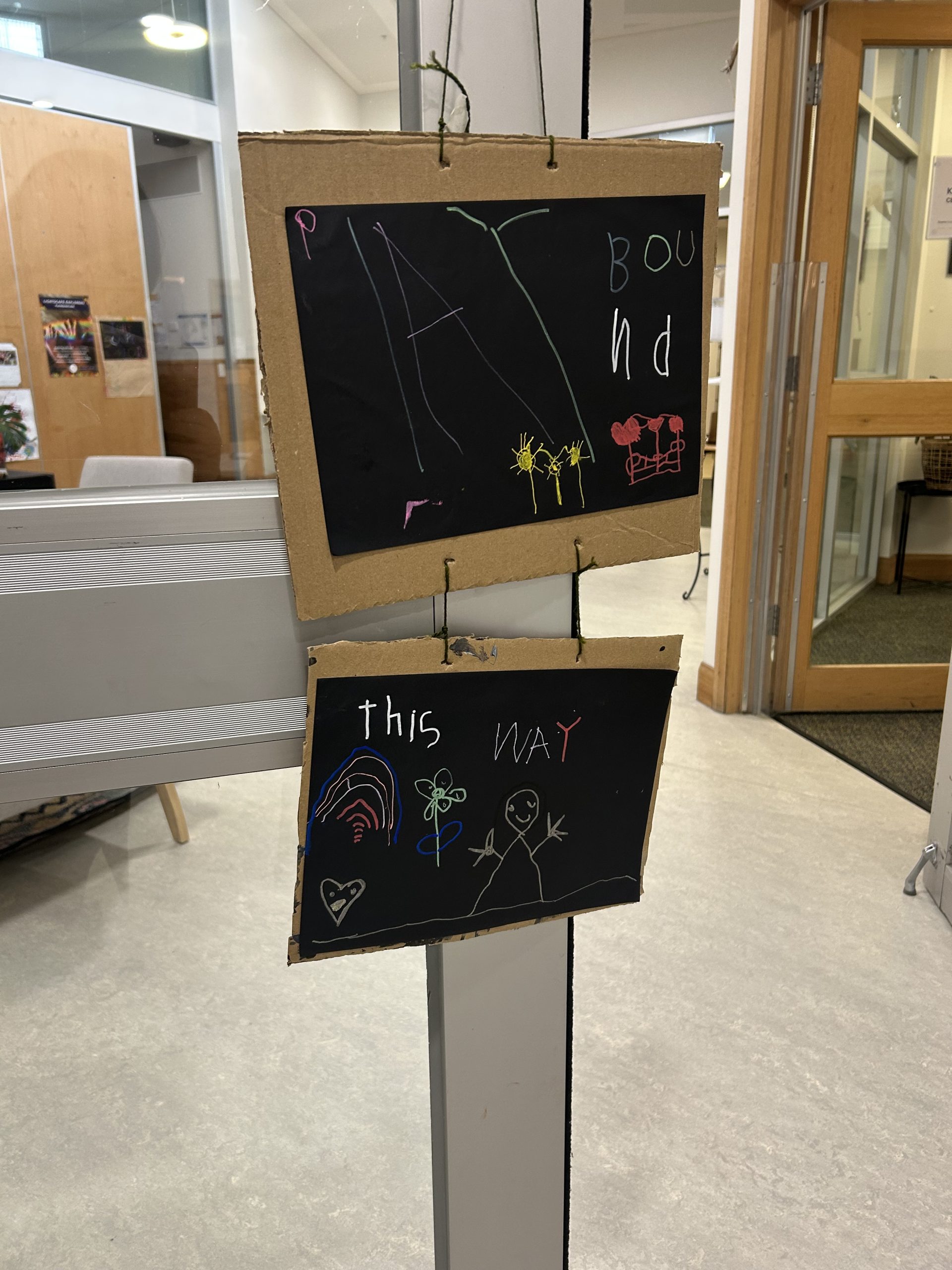
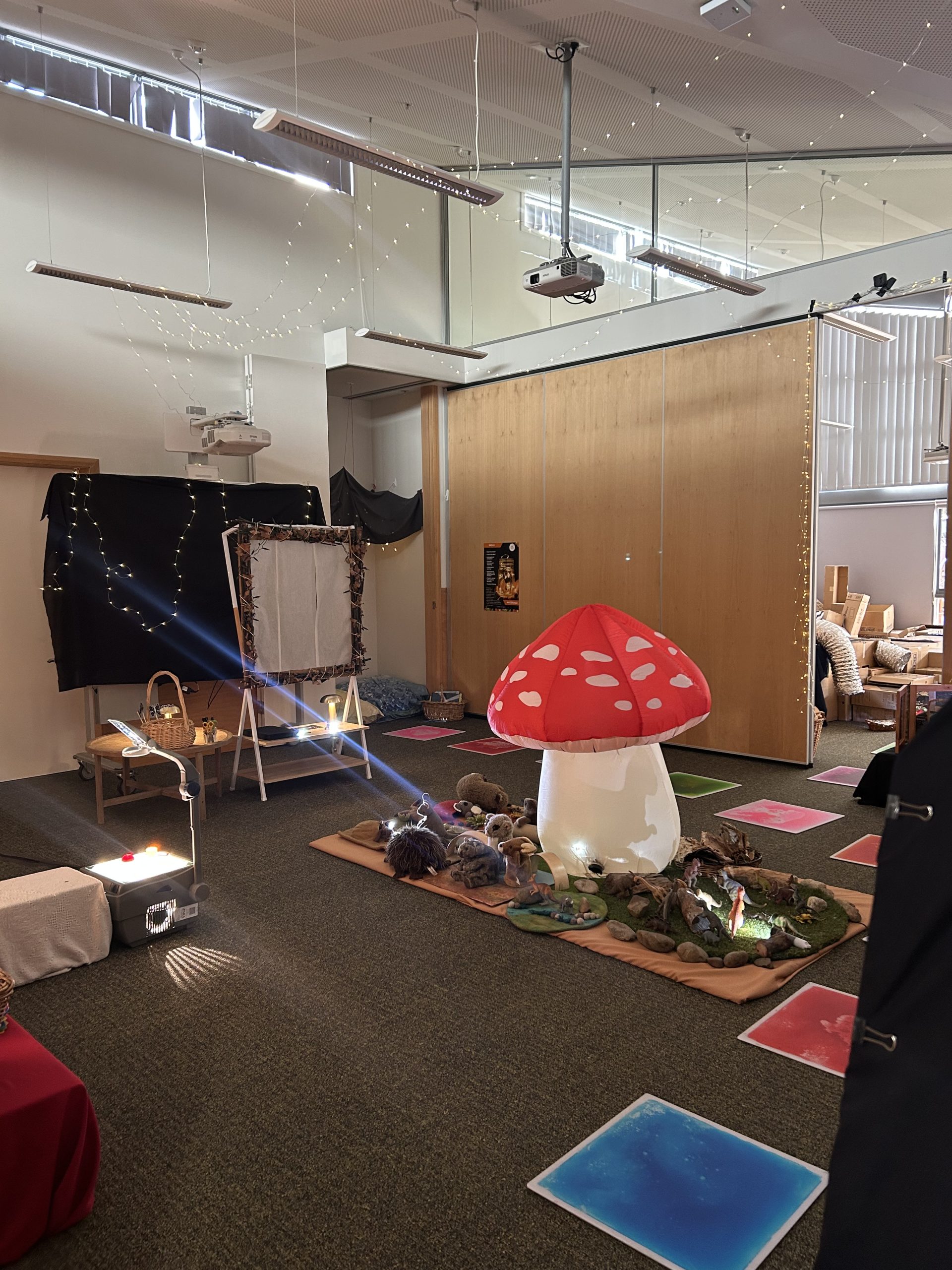
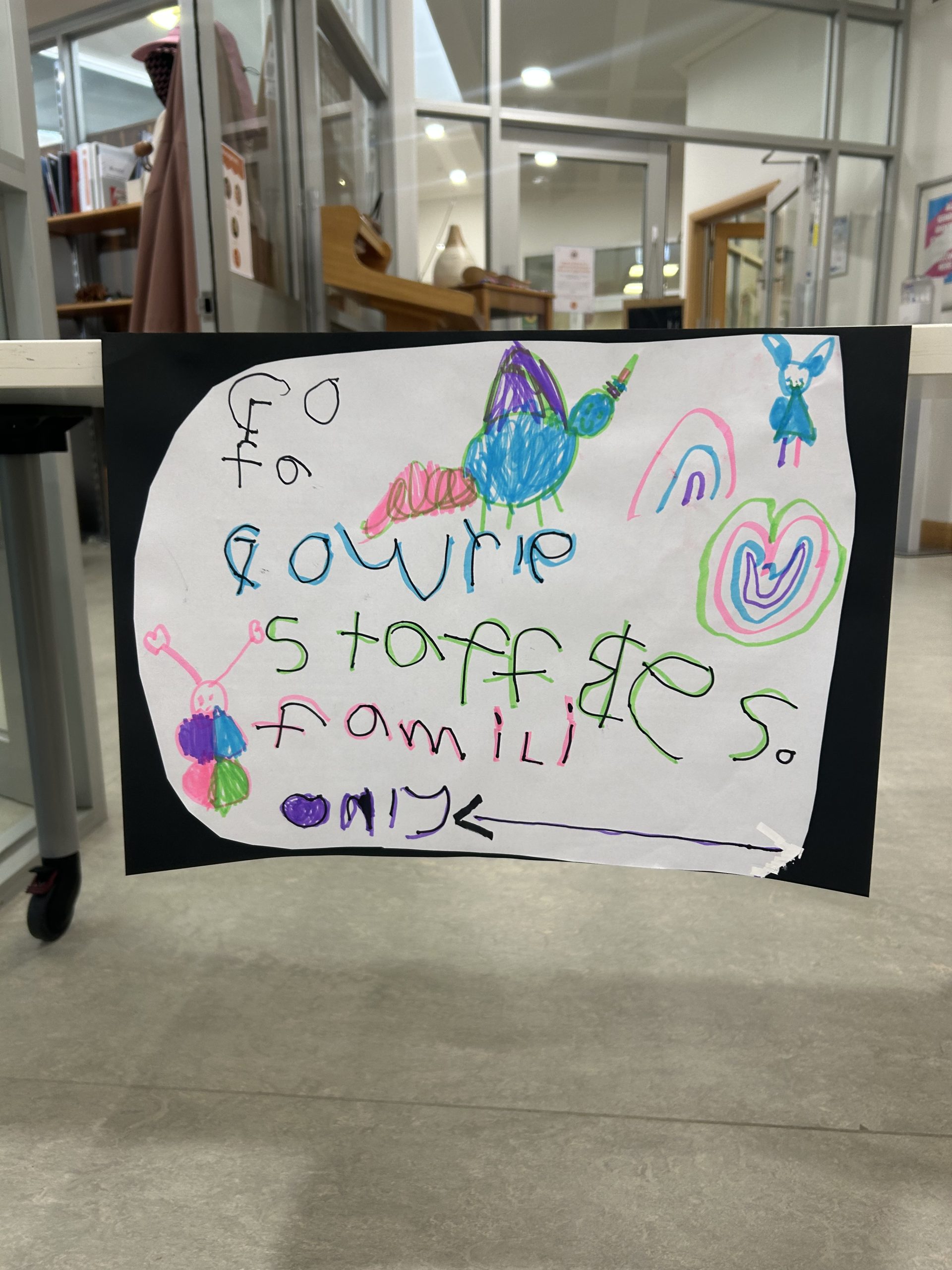
Educators created inclusive, all-ages children’s committees, asking children what they wanted to see at Playbound, and provided them with an extensive range of materials to explore. Children took their roles as curators and guides seriously, enjoying the opportunity to lead, and developed signs for visiting families to locate the event within the centre. In a video about the event, Gowrie @ the Harbour’s Educational Leader, Philippa Almack-Kelly, talked about how ‘deep listening’ and observation helped educators to tune in and connect with children’s voices.
Deep listening involves being curious, fully present and focused without judgment on the baby or child (Rinaldi, 2011; Davies, 2014). Educators observe the direction of their gaze, their words, sounds, expressions and actions to derive meaning or extend play. Educators might narrate or mirror a child’s actions and observe their response and interest in the object of play—whether it ceases or continues, bringing in new materials as needed.
Materials for ‘Lightscape Explorers’ included transparent coloured blocks, tiles, cylinders, torches, light ropes, blacklights, fluorescent paints and a large loose parts play area of cardboard boxes and foil tubes, which children crawled into with flashlights and transparent objects. Children’s preference for these materials spawned an intricate system of interconnected tunnels for crawling with multiple entry and exit points and light play possibilities. One educator, Nathan, described how he had resolved his mixed feelings about this ‘messy’ area: ‘When children make play spaces for themselves, it might not look like much to parents. But to children, it is exactly what they wanted. We had to let go of our adult beliefs about how things should look to help children achieve their plan for this event.’
The impact of embedding children’s voices
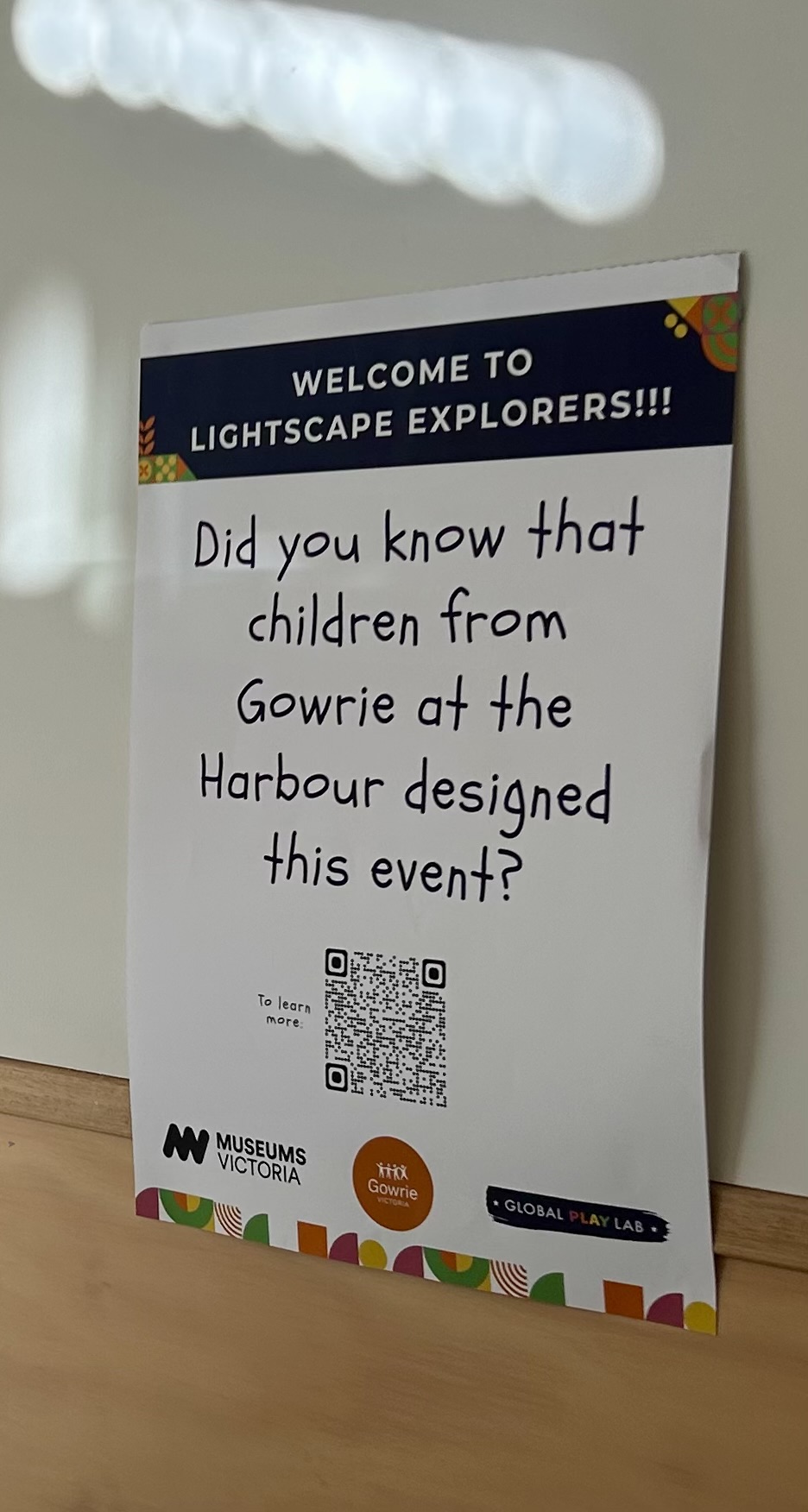
‘Lightscape Explorers’ reinforced what educators knew about loose parts play—that materials with endless possibilities can be far more engaging and educational for children than those with a clearly intended use. Accordingly, Gowrie Victoria’s event partner, Global Play Lab, developed resources for families on the value and benefits of loose parts play. ‘Lightscape Explorers’ was a great success, reaching maximum capacity a week before the event. Drawing on their expertise in child development, play and learning, Gowrie @ the Harbour supported children to create an experience that honoured their diverse voices and ideas and generated much learning for all who participated.
*Note: This project was implemented by Gowrie @ the Harbour, a Gowrie Victoria service.
Links included above:
Link to event: Lightscape Explorers – Museums Victoria
Link to the Gowrie Victoria video, which includes footage of children’s committees: https://www.linkedin.com/posts/gowrie-victoria_earlylearning-stemeducation-childledlearning-activity-7356164182154625025-DrAa?utm_source=share&utm_medium=member_desktop&rcm=ACoAAAMy774BY2IhQ2EdwJyIyZHwqXFHQVeh708
Gowrie Victoria: Gowrie Victoria
Gowrie at the Harbour: Gowrie Victoria’s Docklands Early Learning Centres | Gowrie Victoria
Museums Victoria: Museums Victoria
Museums Victoria’s Playbound Festival: Playbound! 2025—Museums Victoria
Global Play Lab: Global Play Lab
Loose parts and light play resources for families: Lightscape Explorers — Global Play Lab
Voice of the Child toolkit: Voice of the Child toolkit – Centre for Community Child Health
Early Years Strategy: Early Years Strategy 2024-2034 | Department of Social Services
Child-developed event signage (see attached photos)
References
Constable, L., Cooper, J., Ding, J., Yang, N., Kelly, J., Davies, S., & Knight, K. (2025). Voice of the Child. A toolkit for involving children and young people in research and service provision. The Centre for Community Child Health at The Royal Children’s Hospital, and the Murdoch Children’s Research Institute. https//doi.org/10.25374/MCRI.28935185
Davies, B. (2014). Listening to children: Being and becoming. Taylor and Francis.
Rinaldi, C. (2011). The pedagogy of listening: The listening perspective. In C. P. Edwards, L. Gandini, & G. E. Forman (Eds.), The hundred languages of children: The Reggio Emilia experience in transformation (3rd ed.) (pp. 233–246). Bloomsbury Publishing USA
Stafford, L., Harkin, J. A., Rolfe, A., Burton, J., & Morley, C. (2021). Why having a voice is essential to children who are involved in family support services. Child Abuse & Neglect, 115, 104987. https://doi.org/10.1016/j.chiabu.2021.104987
ECA Recommends: Ethics in Action – A practical guide to implementing the ECA Code of Ethics
This easy-to-use practical guide is suitable for all educators, managers, leaders and childhood professionals caring for children from birth to 12 years of age. This essential and practical 95-page guide to the Early Childhood Australia (ECA) Code of Ethics clearly explains what ‘code of ethics’ means in everyday practice. You will discover case studies, scenarios and provocations to help guide you with everyday ethical implementation.


